


The topic of slavery is emotionally charged. Although America fought a bloody civil war to rid itself of this institutionalized evil, the moral outrage over slavery’s history often overshadows the hard-won victory over it. Because of this, people tend to mistakenly lump all forms of slavery across cultures and time into a single moral category.
This is especially common when biblical passages addressing slavery are brought into the discussion. Frequently taken out of context, these areas of Scripture are used to accuse the God of Christianity of moral failure. The mindset is that because the Bible provides regulations for slavery, it must therefore endorse the American chattel version of it.
But the reality of what Scripture says is far different from what critics claim.
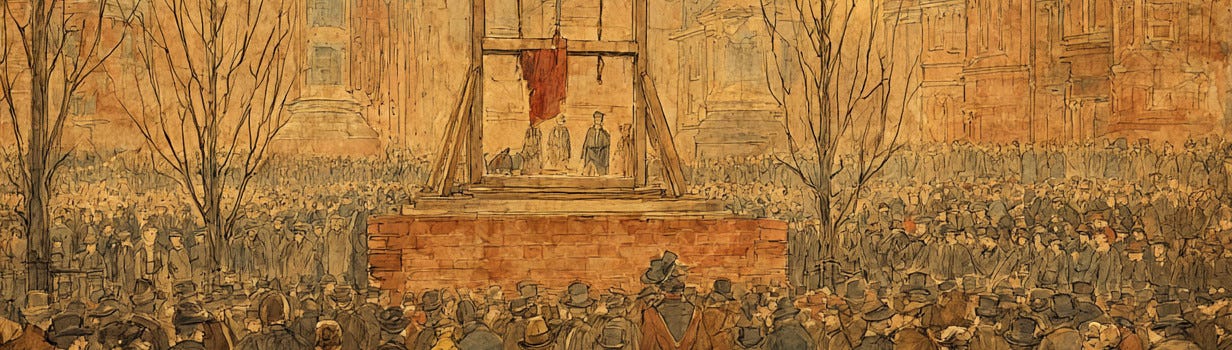
Punishable by Death
American chattel slavery was fueled by the Transatlantic Slave Trade between Europe, Africa, and the Americas. This global trade network resulted in the forced kidnapping and enslavement of millions of Africans, often through capture and sale by members of their own region.
It was a horrific atrocity, and one the Bible explicitly condemns. In fact, under Mosaic law, the biblical punishment for this practice was far more severe than anything that currently exists in American law today.
“Anyone who kidnaps someone is to be put to death, whether the victim has been sold or is still in the kidnapper’s possession.” (Ex 21:16)
The moral revulsion toward this practice is unmistakable in Scripture. It was not to be tolerated. By this standard, those involved in the foundation of antebellum slavery in the American South would have stood under a sentence of death.
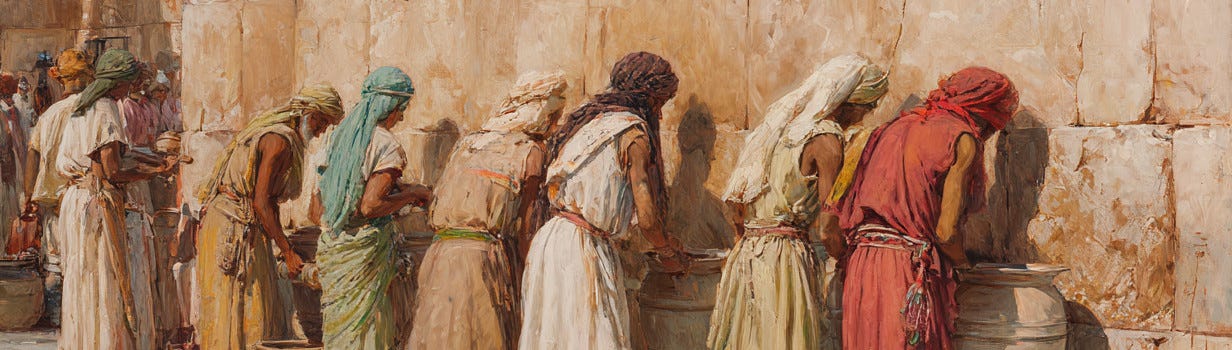
Indentured Servitude
Though many do not realize it, we live in the richest society that has ever existed in human history. In America, those we consider below the poverty line often have shelter, electricity, running water, and even a phone. For most of human history, however, this was not the case.
During biblical times, people were often so poor that survival itself was a daily uncertainty. In many cases, the only way to eat and have shelter was to voluntarily place yourself under indentured servitude.
This is where much of the confusion around slavery begins. The Bible condemns man-stealing by making it punishable by death, yet it also regulates what appears to be slavery shortly after.
That tension feels strange largely because many modern Bible translations still use the heavily loaded word slave. For the modern American reader, indentured servant would be a more accurate term for what Scripture is often describing.
Indentured servitude was common throughout history and it was not unique to biblical times. In fact, the majority of white immigrants to the British colonies arrived as indentured servants.1 In colonial America, many people contracted themselves out to work in households for a set period of time so they could repay their debts and earn passage to the New World.
This form of servitude is often what’s referenced and regulated in the Bible, particularly in the Old Testament. While other passages do address different circumstances, such as those taken after war, these areas are meant to serve as a protection mechanism. In a world where annihilation of one’s enemies was the norm, regulated servitude functioned as a restraint on human brutality.
These regulations were meant to limit abuse and preserve human dignity in a very broken world.
They were certainly not a divine moral stamp of approval however.
In Scripture, the term “forced labor” often refers to regulated state service under covenant law, not unregulated chattel slavery as Americans are accustomed to thinking of it.2
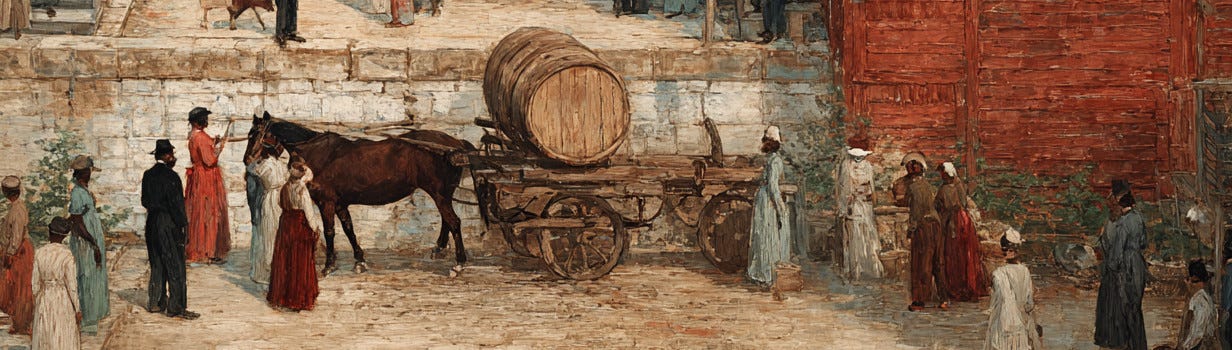
Description is Not Prescription
Even with the distinction between American slavery and indentured servitude, many people remain uneasy. It still feels wrong, and the associated corporal (physical) punishment regulated by Mosaic law in the Old Testament seems harsh.
Anyone who beats their male or female slave with a rod must be punished if the slave dies as a direct result, but they are not to be punished if the slave recovers after a day or two, since the slave is their property. Ex 21:20-21.
It can be hard to stomach why God did not simply condemn the practice outright, and instead allowed Moses to regulate it.
But this discomfort usually stems from two related mistakes. First, it misses the broader point of the biblical narrative. Second, it confuses descriptive passages with prescriptive ones.
The Bible is not a moral propaganda piece. It is a historical account of humanity repeatedly rejecting God’s perfect moral standard and redefining good and evil for themselves. The Old Testament is, quite literally, a record of civilization failing again and again.
Its overarching message is that humanity is utterly hopeless without a savior.
Thus, the Bible is not prescribing how we are to accumulate or treat servants today. It is not instructing us to physically punish those we employ. Rather, it is describing how Israel governed and judged matters related to an already existing practice in the ancient Near East, at a specific moment in history, placing protections on the most vulnerable where none would otherwise exist.
That is not how the story ends, however.
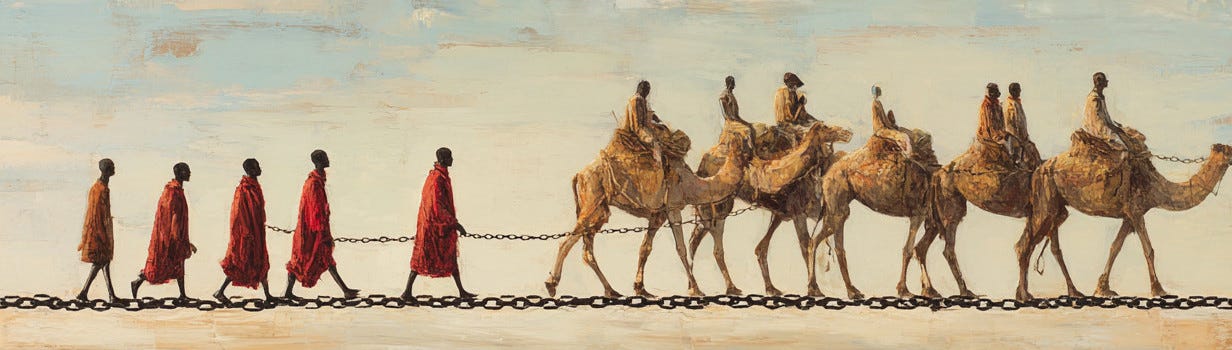
It Was Not Meant to Be This Way
Any system that denigrates others is a clear violation of God’s moral standard. Jesus Himself makes this apparent when we look at how He discussed Old Testament regulations. Though often cited as a passage related to divorce, the overall weight of what Jesus is saying applies far beyond marriage.
In a discussion with the Pharisees, they attempt to trap Jesus on the subject of divorce. They ask whether it is lawful for a man to divorce his wife for any reason, hoping to force Him into misinterpreting the law of Moses. But Jesus exposes the flaw in their thinking. They were confusing civil regulation with moral approval. They were treating a concession to human brokenness as though it reflected God’s ideal.
Jesus responds:
Moses permitted you to divorce your wives because your hearts were hard. But it was not this way from the beginning. Mt 19:8
The point is unmistakable. The existence of a law regulating a broken practice does not mean God endorses that practice. Regulations exist because human hearts are corrupt. They exist to limit damage, not to declare something good. If human hearts were righteous, we wouldn’t need laws in the first place as shown in 1 Tim 1:9-10.
While it would be convenient if the Bible directly addressed every moral issue as it appears in our modern cultural context, Scripture instead reveals something deeper. It exposes the root problem beneath every age and every system.
A reckless heart, a disregard for life, and a willingness to place desire over responsibility. Scripture is aimed at the disease, not just the symptoms.
The immoral behavior may change across cultures, but our broken condition does not.
One In Christ
The Bible’s laws do not present slavery as morally good. They acknowledge a fallen reality and place restraints on a human evil at a specific point in history. From the very beginning Scripture affirms that all people possess equal dignity and worth. Not because of social status or utility, but because they are made in the image of God.
This truth stands in direct tension with every system that treats human beings as property. The Bible affirms this in the New Testament, very clearly in Paul’s letter to Philemon, where he calls for Onesimus to be received back no longer as a slave, but as a brother in Christ.
Yet even today, there are more slaves in the world than at any point in human history. An estimated 40 million people currently live under some form of it; a number that exceeds the entire nineteenth century.3
Sadly, despite the Christian West’s localized victory over slavery, the pattern continues to worsen globally. Humanity has not come any closer to morally saving ourselves.
We still need a savior and always will.
Thankfully, God did not leave us to our devices. That Savior came in Christ Jesus. And in Him, human divisions collapse because dignity is not earned, revoked, or negotiated. Dignity is in our very nature as creatures made in His image.
Through Him and Him alone, the ultimate ideal, God’s ideal, will be realized.
There is neither Jew nor Greek, there is neither slave nor free, there is neither male nor female; for you are all one in Christ Jesus. Gal 3:28
The discussion around biblical slavery deserves much deeper study. My goal here is not to address every specific objection or to exegete every verse often taken out of context, but to help readers understand the broader framework in which these passages appear.
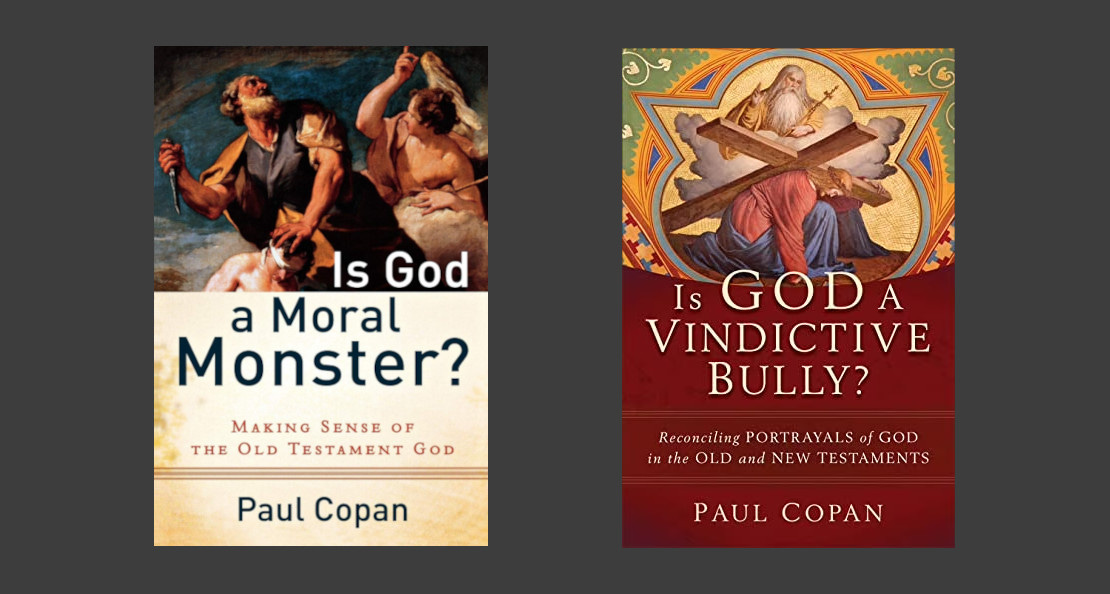
For many, this is enough to reconcile the issue. For those who still struggle and wish to explore the topic further, Paul Copan writes extensively on the subject in “Is God a Moral Monster?” and its follow-up, “Is God a Vindictive Bully?”
Paul Copan, Is God a Moral Monster?: Making Sense of the Old Testament God (Grand Rapids, MI: Baker Books, 2011), 124.
Ibid., 143.
Douglas Murray, The War on the West (New York: Broadside Books, 2022), chap. 2.
Hey Justin, what an interesting and well articulated essay. Multiple decades ago when I was in high school, one of the debate topics was slavery. Even though I was vehemently against slavery I was given the task of developing a debatable case for pro-slavery. The teach was also extremely anti-slavery but it taught me how to develop viable arguments for almost anything. In my case, even though I wasn’t a believer at the time, I used many biblical references to support my argument (although as you pointed out, probably not correctly).
If the Bible clearly condemns slavery, why was sustained Christian opposition to it so rare and marginal for over a millennium after Pentecost? Isolated voices existed (such as Gregory of Nyssa in the late 4th century), but the mainstream church — from the New Testament through the patristic and medieval periods — consistently tolerated and regulated slavery as a legitimate institution. If Scripture and the Holy Spirit made the evil of slavery obvious, why did that clarity only become dominant in the 18th and 19th centuries? The historical record indicates that abolition was not the plain reading of the biblical slavery texts, but a later moral development that Christians eventually used to challenge interpretations that had long treated those texts as permitting slavery