


We live in a culture that often leaves God out of scientific discussion. As a result, many Christians find it challenging to navigate modern discoveries alongside their faith. The prevailing narrative suggests that as scientific knowledge advances, belief in God must retreat.
This conclusion rests on an assumption rather than discovery. It maintains that only natural explanations can be trusted. But when that assumption is set aside, a very different picture emerges.
Advances in science continuously point toward the God of Christianity, not away from Him.
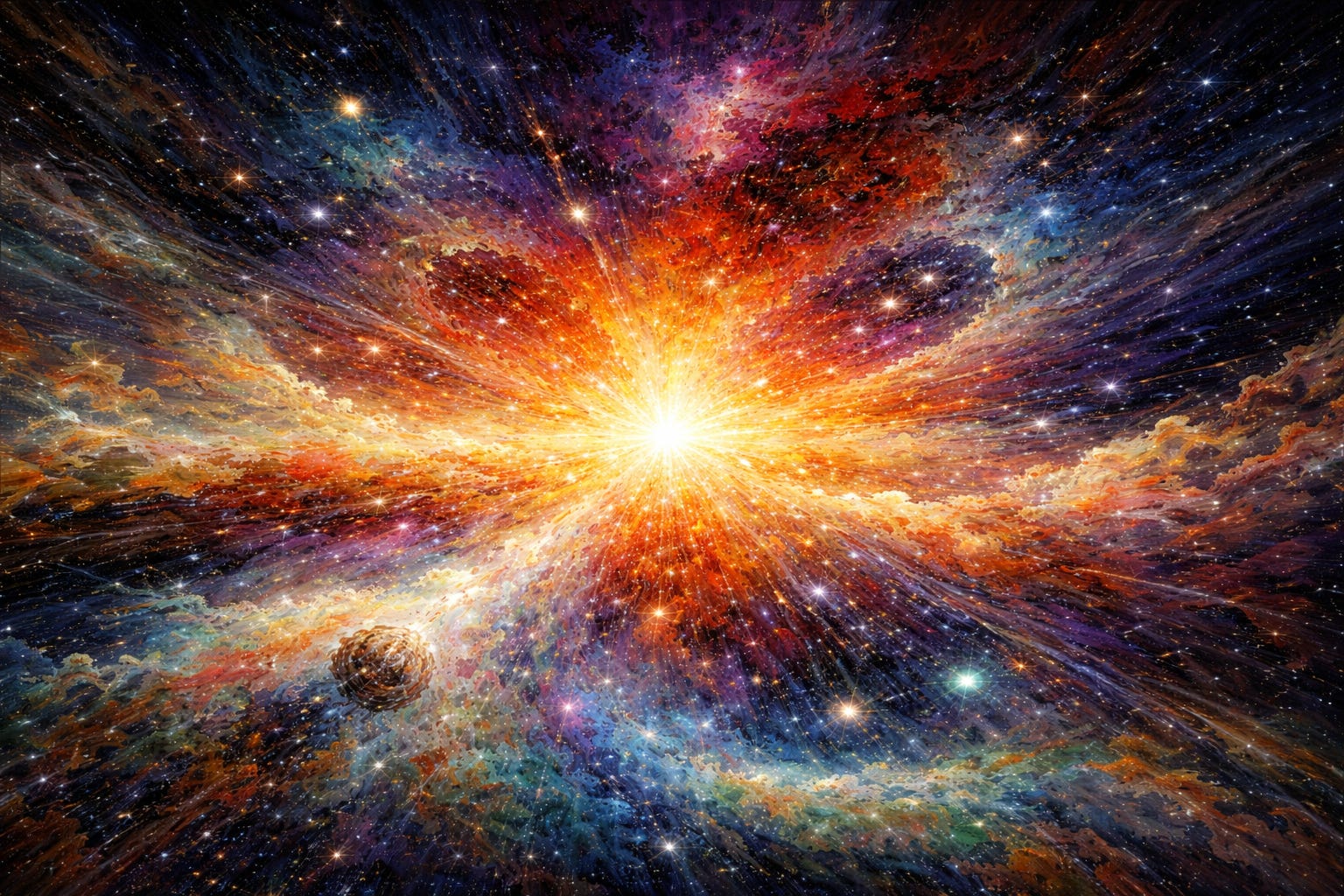
One clear example of this is the discovery of the Big Bang. In short, the Big Bang theory holds that the universe had a beginning.1 Multiple lines of evidence support this conclusion, such as the Second Law of Thermodynamics, expansion of the universe, cosmic background radiation, and Einstein’s theory of general relativity. Taken together, these discoveries strongly indicate that the universe is not eternal, but had a definite starting point.2
In The Beginning God Created
I will admit something that still embarrasses me. In my youth, I rejected the Big Bang outright. I assumed that if the Big Bang caused the universe, then God must not have.
By rejecting the Big Bang, I thought I was protecting my faith, but in reality I was shielding it from evidence. I was operating from fear rather than confidence. As I grew older, I began to recognize a simple truth. If God is real, then the natural world He created will ultimately point to Him, even if some aspects remain mysterious. I should not run from reason, but toward it.
That realization became especially powerful in light of the very first words of Scripture.
“In the beginning God created the heavens and the earth.” Gen 1:1
If this statement is true, then a universe with a beginning is not a problem for Christian belief. It is exactly what we should expect. Science did not uncover a contradiction to Scripture. It uncovered something remarkably consistent with it. How did I not see this sooner?
What surprised me most was discovering how many others share my earlier misunderstanding. Many have been led to believe that the Big Bang somehow disproves God, when in fact it does the opposite. Rather than explaining God away, it corroborates the Biblical account and continues to raise the very question modern science cannot answer on its own.
Why does anything exist at all?
The Law of Causality
According to the law of causality, nothing can be its own cause. Everything that has a beginning requires an external cause outside itself.3 This principle is largely self-evident, which is why I would venture to say you have probably never witnessed someone giving birth to themselves.
When we apply the law of causality to our universe, some important conclusions follow. These takeaways help make up what is known as the Cosmological Argument for God.4
The Universe Requires a Beginner
All things that begin to exist require a beginner.
The universe has a beginning.
Therefore, the universe has a beginner.
The Beginner is Beyond Space, Time, and Matter
The universe is space, time, and matter.
Nothing can be the cause of itself.
Therefore, the cause of the universe must exist beyond space, time, and matter.
The Beginner is Powerful
Causing an entire universe requires immense power.
The universe exists.
Therefore, whatever caused the universe must be immensely powerful.
The Beginner is Supernatural
The universe is what we call nature.
Nothing within nature can cause nature itself.
Therefore, whatever caused the universe must exist beyond nature. That is what we call supernatural.
What, or who, does a spaceless, timeless, immaterial, powerful, supernatural cause sound like to you?
For Christians, the discovery of the Big Bang aligns remarkably well with what Scripture has always claimed about God.
But What Created God?
At this point, a common question is often raised. “If nothing can cause itself, then what caused God?” This question, however, is a category mistake.
The law of causality does not show that everything needs a cause. It shows that anything which begins to exist requires a cause. If something does not have a beginning, the law of causality does not apply to it.
The God of Christianity is described as the uncaused, first cause. He is the source from which all things come and the one upon whom all things depend. Scripture affirms this clearly. Hebrews describes God as existing before creation and remaining unchanged, while Revelation declares Him to be the one who is, who was, and who is to come.
In Exodus, when God speaks to Moses from the burning bush and declares, “I AM WHO I AM,” He is revealing His eternal and uncreated nature. God does not come into being. He simply is. He depends on nothing outside Himself for existence.
Einstein’s Blunder
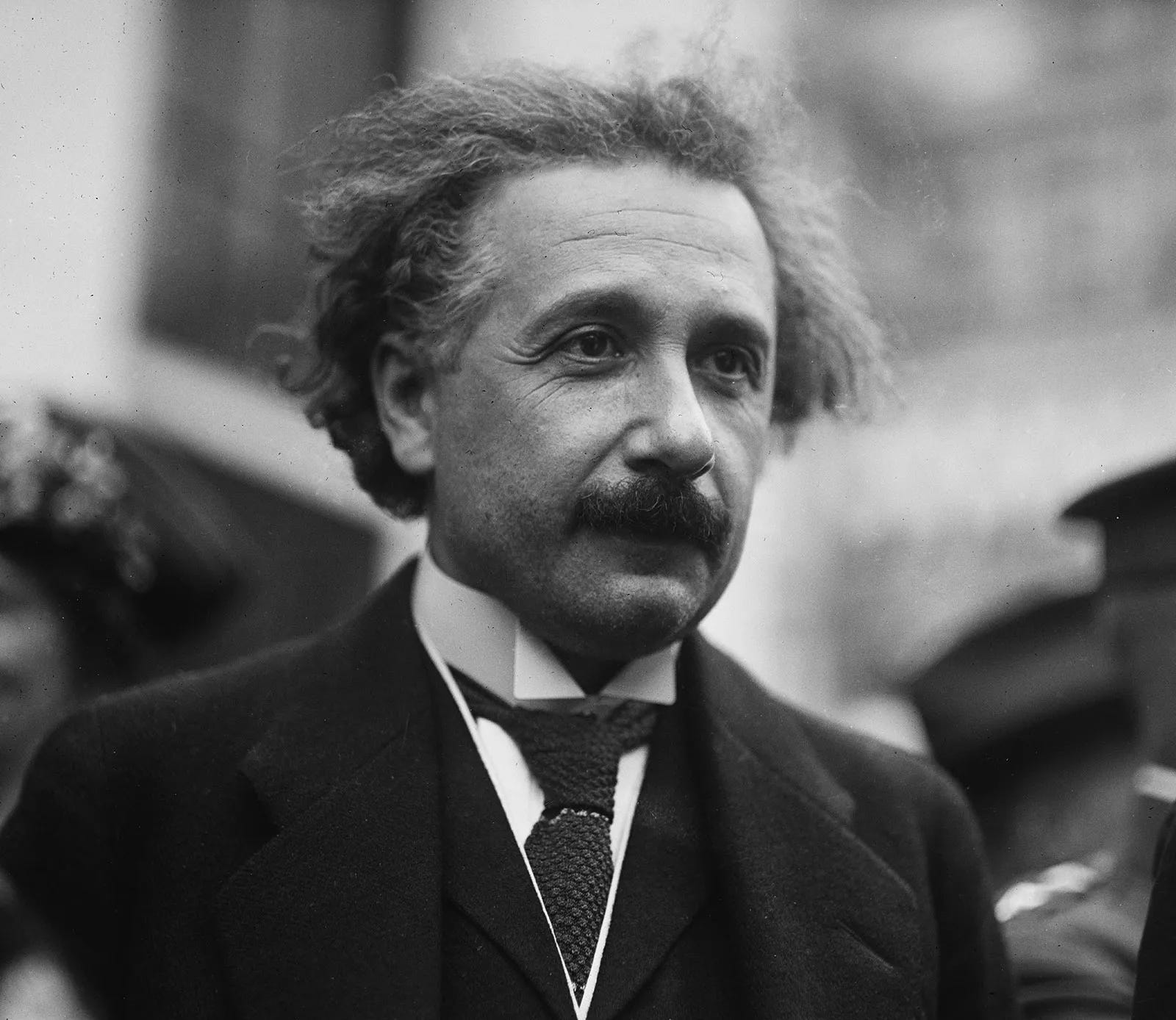
Albert Einstein, like many scientists of his time, believed the universe was eternal. The universe itself was thought to be the uncaused eternal reality. God was unnecessary.
When Einstein’s own equations began pointing toward a universe with a beginning, he introduced a mathematical constant which preserved the idea of an eternal universe. The constant later proved to be incorrect, and Einstein eventually abandoned it. The ordeal is now famously referred to as his “greatest blunder”.5
This episode illustrates an important truth. Even brilliant minds do not always follow the evidence wherever it leads. Often, evidence is filtered through deeply held assumptions about what is and is not allowed to be true.
As further discoveries continued to support the Big Bang, scientists were forced to confront a profound implication. If the universe had a beginning, then it could no longer be the ultimate explanation for our existence.
One prominent scientist captured the moment with remarkable clarity.
While reflecting on the implications of modern cosmology, Robert Jastrow, a religious agnostic, astrophysicist, and the founding director of NASA’s Goddard Institute for Space Studies famously wrote:
For the scientist who has lived by his faith in the power of reason, the story ends like a bad dream. He has ascended the mountains of ignorance. He is about to conquer the highest peak. As he pulls himself over the final rock, he is greeted by a band of theologians who have been sitting there for centuries.6
Norman L. Geisler and Frank Turek, I Don’t Have Enough Faith to Be an Atheist, Chapter 3
William Lane Craig, The Kalam Cosmological Argument, Part II
Albert Einstein, quoted in Fred Heeren, Show Me God
Robert Jastrow, God and the Astronomers
Well stated! I have had similar thoughts throughout the year. Many times science only supports the Bible, rather than disproving it.
Amazing, my friend!