


Imagine for a moment you are walking along a trail deep in the woods. For miles, everything around you feels untouched, quiet, and naturally beautiful. As you continue, you eventually come to a rocky riverbed and notice something unusual. Resting clearly in view is a heart-shaped arrangement of stones.

What best explains this pattern?
Did rushing water randomly arrange the rocks during a heavy rain? Did an animal somehow stack them just right? Or is the most reasonable explanation that another hiker deliberately placed them there to create something meaningful?
Most people do not hesitate. You likely reached a conclusion the moment you saw it.
You did not need a geological survey or scientific analysis to form your conclusion. You identified instinctively that a clear and meaningful pattern points to a mind, and most likely determined a person arranged the rocks. This is how we naturally reason. When we encounter complex and recognizable arrangements, we recognize intention.
We see evidence of intention everywhere. Cities, buildings, artwork, finely crafted watches, and even simple arrangements of stones all point back to a mind behind them. This matters, because if the universe itself is the product of a mind, then we should expect to see similar clues at a much greater scale.
What we find is surprising. The universe is structured with an extraordinary level of exact precision that far exceeds anything humans are capable of. The deeper we look, the clearer it becomes that this kind of precision is not what we expect from chance alone. It looks far more like the work of an immensely powerful architect.
The Fine-Tuning of the Universe
Spacecraft navigation is absolutely incredible. Human minds have figured out how to launch technology from one moving object in space toward another millions of miles away. The precision involved is so tight that even a tiny fraction of a degree can cause a spacecraft to miss its destination by thousands of miles. But while that level of exactness is impressive, it does not even come close when compared to the precision required of the universe itself to harbor life.
Scientists over the years have identified roughly 140 principles, sometimes called anthropic or fine-tuning principles.1 These are conditions, many of them built into our universe, that if even a hair’s breadth different would render life impossible. Many of these values are set with such an extremely low tolerance that they are difficult to fathom.
Let’s take a look at just a few of these principles to demonstrate just how fine-tuned our universe is to allow for life.
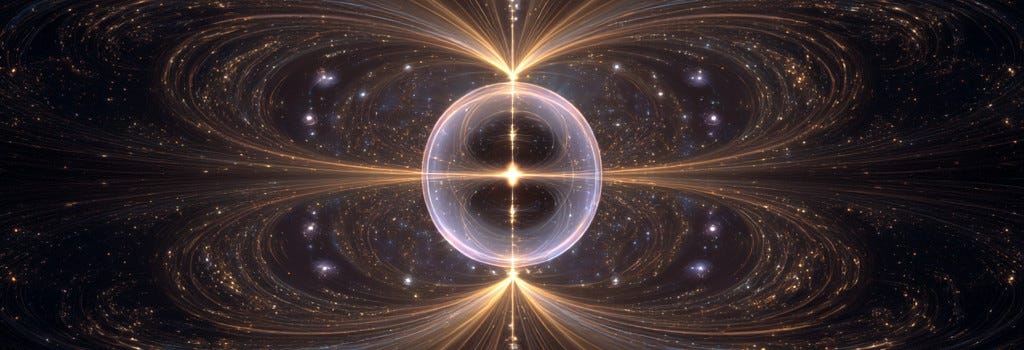
Force of Gravity
Apart from keeping us grounded to the Earth, gravity governs how matter pulls together to form stars and galaxies.
If gravity were slightly stronger, stars would be too hot and would burn out too quickly. But if gravity were slightly weaker, stars would never ignite at all, and heavier elements could never be produced. In either case, life would be impossible.
The force of gravity has a precision of just 1 part in 10^34. That’s a huge number representing a 10 followed by 34 zeros. This tolerance is equivalent to adjusting gravity by less than one inch on a ruler the size of the entire universe.2

Strength of the Strong Nuclear Force
The strong nuclear force holds atomic nuclei together. It must be exactly 10^40 times stronger than gravity.3
If this force were any stronger, hydrogen could not exist in the universe. But if it were any weaker, only hydrogen could exist. In either case, the chemistry required for life would be impossible.4
For comparison of the size of this number, only ~10^20 seconds have elapsed since the universe began.5
The Cosmological Constant
The cosmological constant governs the rate at which the universe expands. It has an even more impressive precision of 1 part in 10^120.6
If this value were slightly larger, the universe would expand too rapidly and matter would never clump together. If it were slightly smaller, the universe would have fallen in on itself. In either case, no structure and no life could exist.
For perspective on the size of this number, there are only ~10^70 atoms in the entire known universe.7

Initial Entropy of the Universe
Initial entropy describes how evenly energy was distributed at the very beginning of the universe. If it were even slightly different, the universe would either be too chaotic or too uniform for stars, galaxies, or life to form. In either case, a life-permitting universe would be impossible.
It has an unfathomably low tolerance of 1 part in 10^10(123).8
Math isn’t for everyone, so to help visualize this number, imagine every atom in our universe represents a trillion trillion trillion entire universes the same size as ours. Now imagine being blindfolded and selecting one specific atom on your very first try among those many universes.
That is the impossible level of exactness involved.
Clearly Perceived
For many, the evidence of design is undeniable. Atheist astronomer Fred Hoyle even noted that the facts suggest “a super intellect has monkeyed with physics, as well as chemistry and biology, and that there are no blind forces worth speaking about in nature.”9
Even pop culture is beginning to reflect these principles. In the sitcom Young Sheldon, the boy-genius Sheldon draws on them in a heartfelt exchange as he tries to help his mother with her faith during a season of doubt.
I highly recommend watching the 3-minute clip if you have a few minutes.
CREDIT: Warner Bros. Television (WBTV)
Romans 1:20 tells us that God’s eternal power and divine nature are clearly perceived through what has been made, so that no one can honestly say they did not know. The discovery of our fine-tuned universe is simply one more example of this truth.
While the fine-tuning of our universe may not stand on its own as direct evidence for the God of Christianity, it certainly corroborates the broader case. As Young Sheldon says, it “makes it logical to conclude there is a creator.” This shows, once again, that faith in God is not based in a blind belief, but a deeply reasoned trust.
God is the best explanation of why anything exists at all.
What makes the fine-tuning of our universe especially striking is how it puts human achievement into perspective. We marvel at the things humans build. Advanced technology, engineering, and design often leave us impressed with our own abilities. Yet even our most exact creations operate within margins that are laughable compared to the razor-thin tolerances built into the universe itself.
The deeper we look into our universe, the clearer the contrast becomes. What we create reflects limited minds working within an already prepared world. What the created universe reflects is a level of precision, order, and intentionality that points beyond us entirely.
Not to blind luck, but to a mind far greater than our own.
William A. Dembski, Jonathan Wells, and Michael Behe (eds.), The Comprehensive Guide to Science and Faith, Harvest House Publishers, 2021, p. 223.
Jay W. Richards, “A List of Fine-Tuning Parameters,” Discovery Institute, 2018.
https://www.discovery.org/m/securepdfs/2018/12/List-of-Fine-Tuning-Parameters-Jay-Richards.pdf
Richards, “List of Fine-Tuning Parameters.”
Craig, “Fine-Tuning of the Universe.”
“The Fine-Tuning of the Universe,” Reasonable Faith (short video), accessed February 23, 2026, https://www.reasonablefaith.org/videos/short-videos/the-fine-tuning-of-the-universe.
Richards, “List of Fine-Tuning Parameters.”
Norman L. Geisler and Frank Turek, I Don’t Have Enough Faith to Be an Atheist, Crossway Books, 2004, p. 106.
Richards, “List of Fine-Tuning Parameters.”
Fred Hoyle, “The Universe: Past and Present Reflections,” Engineering and Science (November 1981): 12
And, of course, I would prefer to live in a world that's designed with good purpose rather than one that just came out by random chance (the same way I would prefer to receive a gift that's been thoughtfully chosen rather than just being handed the first random junk the giver happened to come across).
Stephen C. Meyer also have a lot of good resources about Intelligent Design and fine-tuning. Have you heard of him?
The fine-tuning argument is one of my favorites. I took an Astronomy class as an elective and they went over the details of fine-tuning for weeks. Loved it.
Nicely done!